 Reviews


 Proudly American


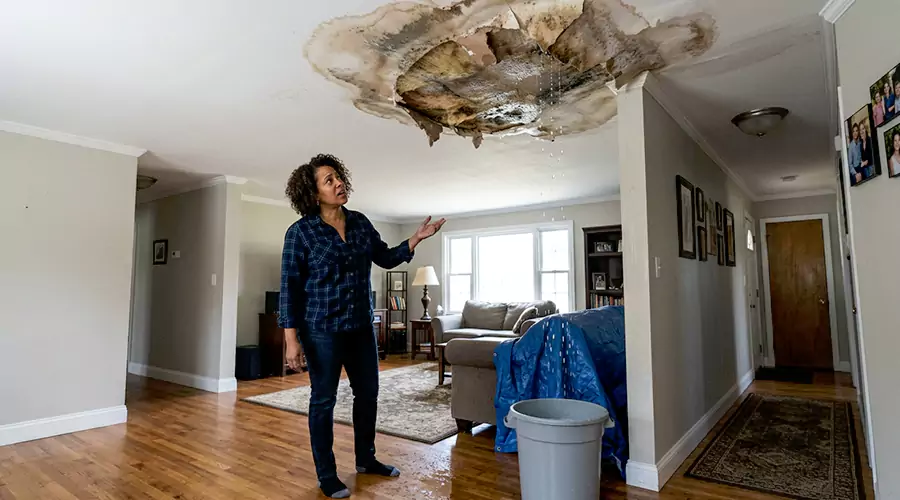
Water damage can weaken ceiling drywall, stain finishes, damage insulation, and create hidden moisture above the visible surface. A small leak may first appear as a brown ring or soft patch. Water damage ceiling repair can address these issues before continued exposure causes sagging or material failure, especially when water collects above drywall instead of draining away.
What Happens to a Ceiling When Water Gets In?
Water affects a ceiling by soaking porous materials and increasing its weight. Drywall can absorb moisture through its paper facing while insulation above it holds water against the panel. Paint may bubble before the board itself starts to soften.
A typical progression looks like this:
| Stage | What You May Notice | What Is Happening |
|---|---|---|
| Early exposure | Small stain or damp spot | Water reaches the finish |
| Continued exposure | Bubbling paint or widening stain | Drywall absorbs moisture |
| Advanced exposure | Sagging or softness | Board strength begins to drop |
| Severe exposure | Cracking or partial collapse | Saturated material can no longer support itself |
Water damage repair is usually easier when the leak is found before the ceiling begins to sag.
What Are the Most Common Causes of Ceiling Water Damage?
Ceiling water damage usually comes from something above the affected room. The source may be a roof defect or plumbing line. Bathrooms on an upper floor can also leak through failed fixtures or drain connections.
Common causes include:
- Roof leaks after rain
- Broken plumbing supply lines
- Tub or shower leaks
- Overflowing toilets
- HVAC drain problems
- Leaking water heaters
- Failed appliance connections
How Can Water Damage Change Drywall?
Drywall loses strength as its gypsum core absorbs water. The paper facing can separate while a wet panel may bow between ceiling joists. Drywall that dries quickly after a small clean-water leak may remain usable when it stays firm and flat. Replacement becomes more likely when the panel feels soft or has started sagging. A water damage restoration ceiling inspection should consider both the visible panel and the cavity above it. Dry insulation can make a repair much simpler than a ceiling with trapped moisture above the board.
Can Ceiling Water Damage Lead to Mold?
Yes. Mold can develop when ceiling materials stay damp long enough to support growth. The greatest concern is hidden moisture above the painted surface because insulation or the backside of drywall can remain wet after the room looks normal. Wet building materials should begin drying within about 24 to 48 hours when possible. Delayed drying increases the chance that a moisture problem will become harder to manage.
Signs that moisture may still be present include:
- A musty odor develops.
- The stain keeps growing.
- Paint continues bubbling.
- The ceiling feels soft.
- The room stays unusually humid.
- New spotting appears near the damaged area.
- Insulation above the ceiling remains damp.
- Moisture readings stay high.
Can a Water-Stained Ceiling Be Repaired Without Replacement?
A stained ceiling can sometimes be repaired without replacement when the leak is fixed and the panel dries fully. The board should remain firm with no sagging.
Replacement is more appropriate when:
- The drywall is soft.
- The panel has sagged.
- Paper facing has separated.
- Mold is growing through the material.
- Contaminated water reached the ceiling.
- The cavity above cannot dry with the panel in place.
Painting over a damp ceiling only hides the symptom. Moisture can continue damaging the material behind the paint.
What Can You Check Yourself?
A simple visual and moisture check can help show whether the ceiling is improving. Do not press hard on a sagging panel because saturated drywall can fail without much warning.
Use this process:
- Mark the outside edge of the visible stain.
- Photograph the area.
- Check whether the stain expands after rain or plumbing use.
- Use a noninvasive moisture meter if available.
- Compare readings with a nearby dry section.
- Repeat the check the next day.
When Should You Call a Professional?
Professional assessment is appropriate when the ceiling is sagging or water has reached electrical fixtures. Help is also appropriate when the source cannot be found or the cavity remains wet after the visible leak has stopped.
Seek help when:
- A ceiling section bows downward.
- Water drips through a light fixture.
- Several rooms show ceiling stains.
- The leak keeps returning.
- Insulation above the ceiling is saturated.
- Mold covers a large area.
- The ceiling feels soft over a wide section.
Water damage restoration may involve opening a limited section so wet insulation can be removed and framing can dry.
How Can You Prevent Ceiling Water Damage?
Prevention works best when roof and plumbing problems are found before water reaches finished ceilings. Regular checks also make it easier to identify the source when a small stain first appears.
Use this maintenance routine:
- Inspect ceilings after heavy rain.
- Check attic areas for damp insulation.
- Look under upper-floor plumbing fixtures monthly.
- Keep roof drainage clear.
- Repair small roof defects promptly.
- Watch HVAC drain lines for overflow.
- Investigate new stains instead of repainting them.
Conclusion
Ceiling water damage can begin as a small stain and progress into softened drywall or sagging material if the source continues. The safest response is to stop the leak and verify that the cavity above the ceiling is drying. Firm drywall may sometimes remain in place. Sagging or contaminated material usually needs more attention. This week, inspect ceilings beneath bathrooms and attic areas for new staining.
Frequently Asked Questions
Can a ceiling collapse from water damage?
Yes. Saturated drywall becomes heavier and weaker, especially when water collects above the panel.
Does every ceiling stain mean active water damage?
No. A dry stain can remain after an old leak. A moisture reading can help show whether the area is still wet.
Should I paint over a water stain?
Only after the source is fixed and the ceiling is fully dry. Stain-blocking primer may be needed before the finish coat.
Can wet ceiling drywall dry on its own?
A lightly damp panel may dry when airflow reaches it. Saturated insulation or trapped moisture can prevent complete drying.
Why is my ceiling stain getting bigger after the leak stopped?
Water may still be spreading through insulation or framing. The visible edge can expand even after the original flow has slowed.
Is a musty ceiling smell a sign of mold?
It can be. A persistent musty odor can indicate damp material or hidden growth above the finished surface.